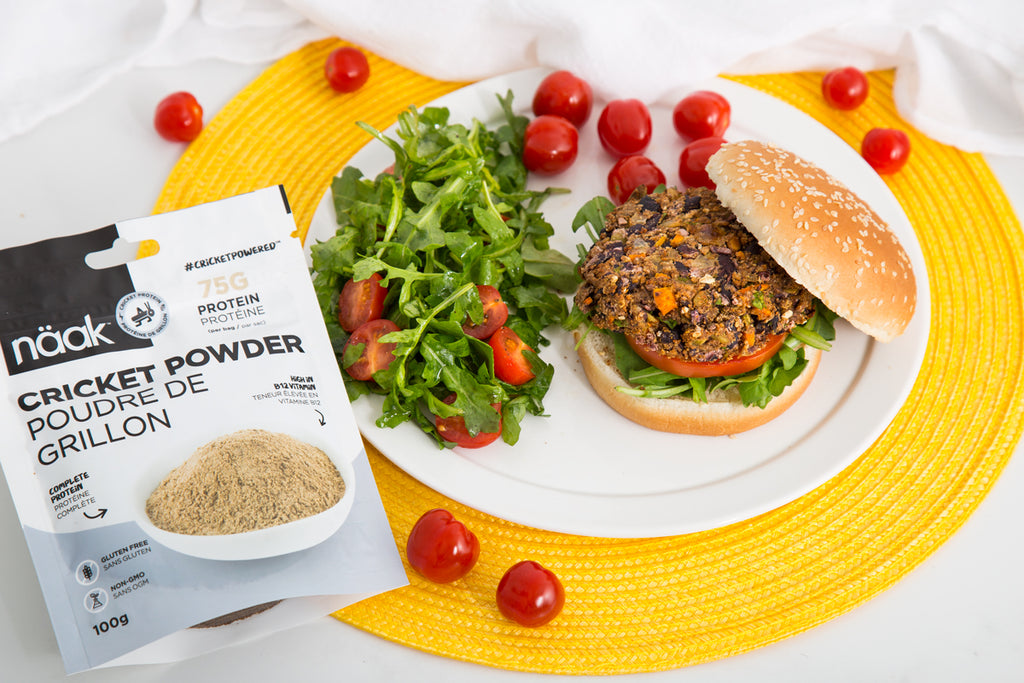
1 sac - 15 portions
40,00€
You asked Google your questions about crickets and cricket powder, so we've taken it upon us to give you the answers you are looking for. Without further ado, here are the answers to the 10 most popular questions about crickets and cricket powder!
You can most certainly eat crickets! in fact, according to a report on edible insects published by the food and agriculture organisation (FAO), insects are an important prospect for food and feed security worldwide. In addition, did you know that insects form part of the traditional diets of at least 2 billion people around the world? Crickets are not the only insects you can eat, there are actually 1900 insect species that have reportedly been used as food. However, in Western countries such as Canada where entomophagy (the act of eating insects) isn't as popular yet, crickets are definitely the most common insect consumed.
There are many different ways for you to consume crickets. For instance, you can add cricket powder to the meals you cook (recipe ideas here!) or the treats you bake, you can eat cricket-based snacks, and you can even eat whole, seasoned crickets.
Consumption of crickets is not dangerous. There are lots of food safety standards and guidelines that must be met in Canada, and if crickets were unsafe for human consumption they would not be available on the food market today.
Please note that individuals who are allergic to crustaceans are likely allergic to crickets. Why? Because crickets and crustaceans are related groups.

As the name entails, cricket powder is made from crickets. In fact, if you buy a bag of cricket powder, you'll notice that there is only one ingredient on the ingredient list: crickets. In order to make the powder, crickets are simply roasted, and ground up into a powder!
Cricket powder on its own has a nutty and earthy flavour. Hence, if you add lots of it to the meals you are cooking or the treats you are baking, it will bring those nutty and earthy flavours to the table. However, if you only add a little bit of cricket powder to your meals, the nutty and earthy undertones are more likely to be masked by the flavours of different spices and herbs which may be stronger.
Eating crickets is full of benefits, both for you and the planet.
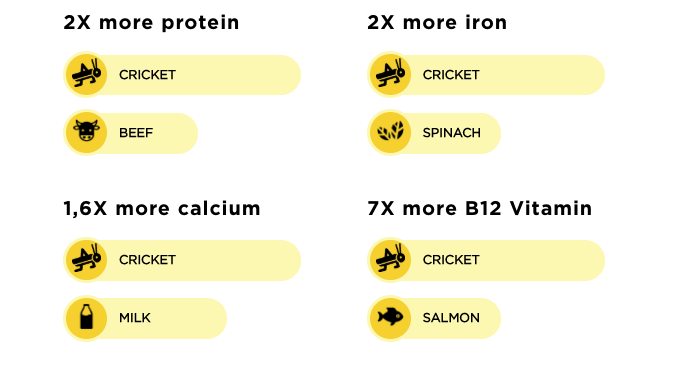
Cricket powder is actually a superfood with tons of nutritional benefits: it is a complete source of protein i.e. contains all the essential amino acids, and it provides 2X more protein than beef, 2X more iron than spinach, 1.6X more calcium than milk, and 7X more vitamin B12 than salmon on a per weight basis!
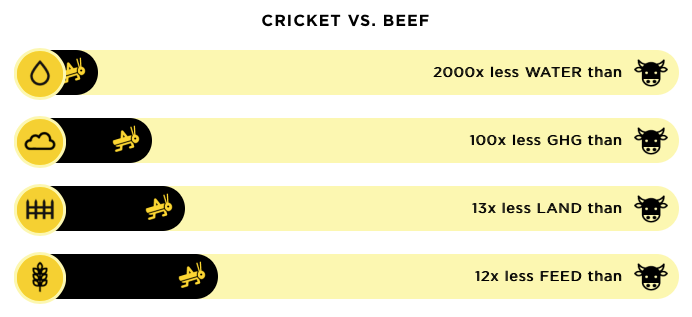
Cricket is the most sustainable protein source in the world. Producing cricket powder requires less resources than dairy protein, not to mention is creates less waste. For instance, cricket farming requires 2000X less water, 13X less land, 12X less feed, and produces 100X less greenhouse gases than beef farming!
Eating crickets is nutritious and very healthy for you! As mentioned above, this superfood is packed with nutrients that are essential to your wellbeing. It can be fully integrated in a sport nutrition diet for ultra endurance athlete. Here are some key points on that subject matter:
These are just some of the many health benefits of a few key nutrients found in crickets. You can read more about why cricket protein is a superfood for ultra endurance athletes!

As previously mentioned, crickets are full of nutrients such as bioavailable protein, B vitamins, minerals, and essential fatty acids; all of which play important roles in human health. Crickets also provide an understudied source of fibre which is found in the exoskeleton of arthropods: chitin. Chitin is an insoluble fiber with potential prebiotic properties, meaning it could benefit human health by promoting the growth of beneficial bacterial species in the intestines.
A recent study examining the effects of consuming 25g of crickets per day found that eating crickets supported growth of the probiotic bacterium. In addition, it was shown that daily consumption of crickets reduced plasma TNF-α; a cell-signalling protein involved in systemic inflammation. Hence, the data suggest that eating crickets may improve gut health and reduce inflammation!
Cricket powder does contain some carbohydrates, but very little! In fact, 1 serving of cricket powder (12g or 2 tbsp) only contains 1g of carbohydrates (1g of fibre, 0g of sugars).
Crickets do contain calcium. In fact, crickets contain 1.6X more calcium than milk on a per weight basis! Calcium is an important nutrient that plays a crucial role in bone health, muscle contraction, hormone release, and more.
Cricket powder is an awesome ingredient that is really versatile and easy to add to your diet. Cricket powder can be used in baking; simply replace 10% of the amount of flour that the recipe calls for with cricket powder. This is a general guideline, but you can adapt any recipe to meet your desired taste and consistency. You can also add cricket powder to pretty much all the meals you cook. If you need some inspiration in the kitchen, click here for cricket powder recipes that you will love!
To buy some cricket powder or ready to eat snacks, it is over here !